Florida Will Requirements: What Makes a Will Valid — and What Voids One
What F.S. 732.502 Requires for a Valid Florida Will
Florida's execution rules are strict, and courts apply them literally. Under F.S. 732.502, a will is valid only if all of the following happen:
- The testator signs at the end of the will. Another person may sign the testator's name, but only at the testator's direction and in the testator's presence.
- The testator signs — or acknowledges an earlier signature — in the presence of at least two attesting witnesses.
- Those witnesses sign the will in the presence of the testator and in the presence of each other.
The testator must also be of legal age and of sound mind at signing, and must not be acting under undue influence, fraud, or duress. Many law offices use three witnesses even though two are required, as extra insurance in case a witness later becomes unavailable or is challenged.
Self-Proving Affidavits: F.S. 732.503
A will can be made "self-proved" at the same signing ceremony. Under F.S. 732.503, the testator acknowledges the will and the witnesses give sworn affidavits before an authorized officer, such as a notary, whose certificate is attached to the will. A self-proving affidavit creates a presumption that the will was validly executed, so the witnesses do not have to be tracked down and put on the stand years later when the will is offered for probate. This is one of the cheapest forms of insurance in estate planning: without it, the estate may have to locate witnesses long after the signing — witnesses who may have moved, died, or forgotten the event.
Handwritten Wills, Oral Wills, and Out-of-State Wills
Under F.S. 732.502(2), a will executed by a nonresident is valid in Florida if it was executed under the law of the state or country where it was made — with one major exception: holographic wills are not valid in Florida, even if they were valid where signed. A holographic will is one written entirely in the testator's own hand and signed without the required witnesses.
The distinction that trips people up: a handwritten will is not automatically a holographic will. If a handwritten document is signed at the end by the testator and attested by two witnesses who sign in the presence of the testator and of each other, it satisfies Florida's ordinary execution formalities and can be admitted — the handwriting itself is not the problem. The problem is the missing witnesses.
Oral (nuncupative) wills, including statements recorded on video, are not recognized by Florida courts.
Florida also now recognizes electronic wills executed through online notarization and maintained by a qualified custodian, but the procedural requirements are technical and the format is unforgiving of mistakes, so most practitioners still recommend a traditional paper signing.
Common Mistakes That Void a Florida Will
These are the errors that most often send a will to the shredder in probate court:
- Presence failures. A witness signs later, in another room, or by mail. F.S. 732.502 requires the witnesses to sign in the presence of the testator and of each other — a will signed in stages usually fails.
- Not signing at the end. The statute requires the testator's signature at the end of the will. Signatures placed elsewhere invite a challenge, and courts have refused probate over signature defects.
- Only one witness, or an acknowledgment no witness actually saw. Two attesting witnesses are the floor, not a suggestion.
- Do-it-yourself and holographic documents. A form pulled from a website and signed at the kitchen table without a proper witnessing ceremony frequently fails one of the formalities above.
- Fraud, duress, mistake, or undue influence. Under F.S. 732.5165, a will procured by any of these is void. This is the classic ground raised when a caregiver or one favored beneficiary orchestrated the signing.
Marrying or Having a Child After Signing: F.S. 732.301 and 732.302
A perfectly executed will can still be partially overridden by later life events. Under F.S. 732.301, a spouse the testator married after making the will — a pretermitted spouse — generally receives the share of the estate they would have received if the testator had died without a will, unless one of the statute's exceptions applies (such as a prenuptial or postnuptial agreement or a provision in the will). Under F.S. 732.302, a child born or adopted after the will was made is treated the same way. If you signed your will years ago and have since married, remarried, or had children, the document on your shelf may no longer control who inherits. Review and update it.
Proving the Will in Court: F.S. 733.107
A will has no effect until it is admitted to probate. Under F.S. 733.107, the person offering the will — the proponent — must establish prima facie that it was formally executed and attested. A self-proving affidavit under F.S. 732.503 satisfies this burden without live witness testimony; without one, the proponent must produce proof of the signing ceremony itself.
Any interested person, such as a beneficiary or heir, can contest the will on grounds including improper execution, lack of capacity, revocation, or the fraud, duress, mistake, and undue influence grounds in F.S. 732.5165. The window to object after receiving formal notice in a probate proceeding is short, so anyone who wants to challenge a will should speak with a Florida attorney immediately.
What Happens If Your Will Fails
If the will is denied probate — or you never made one — your property passes under Florida's intestacy rules. Those rules distribute the estate to the surviving spouse and blood relatives in a fixed order, and they exclude people many testators would want to provide for: unmarried long-time partners, stepchildren, and friends. If the people you want to inherit are not the people intestacy law would choose, the only fix is a properly executed will or other estate planning documents such as trusts or deeds designed to pass property outside probate.
Get Your Will Signed Right the First Time
The execution formalities in F.S. 732.502 leave no room for improvisation, and the cost of getting them wrong falls on the people you meant to protect. An attorney can run the signing ceremony correctly — testator, two witnesses, notary, self-proving affidavit — and make sure later marriages and children do not upend your plan. If you need help drafting a will, contesting a will, or planning your estate, we at the Law Offices of Albert Goodwin can help. Our lawyer, Albert Goodwin, is licensed to practice in Florida and New York. You can reach us by email at email@lawyergoodwin.com.
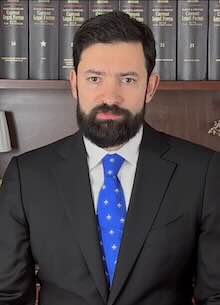
About the Author
Albert Goodwin Esq. is a licensed Florida attorney with over 18 years of courtroom experience. His extensive knowledge and experience make him well-qualified to write authoritative articles on a wide range of legal topics. He can be reached at 786-522-1411 or email@lawyergoodwin.com.